Review of
Presentation and roundtable discussion
12th June 2026, 12:30-2:00pm CET
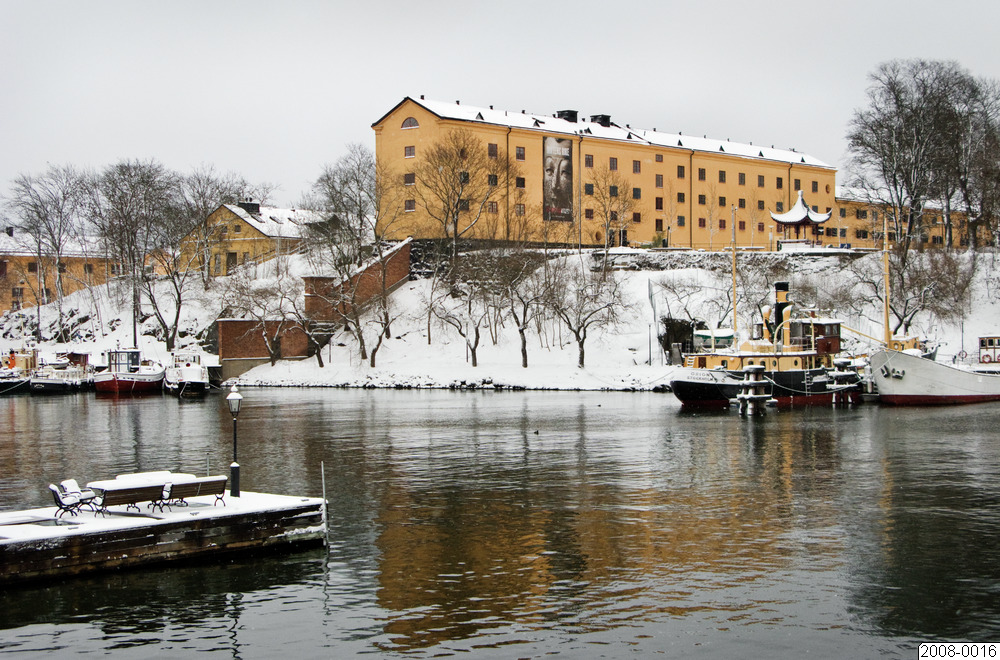
This online session, organised by the Asia Collections Network – Europe in cooperation with Asia Week Paris, featured presentations from three experts: Anke Hein, professor of Chinese archaeology at the University of Oxford, who discussed the historical formation of the museum’s ancient Chinese collections and their significance in establishing Chinese archaeology as a discipline in China; Cecilia Nordström, head of the Department of Asian Ceramics and Works of Art at Bukowskis, who presented the history of the museum’s collections including private donations and the King’s gifts; and Ola Wong, journalist and sinologist, who explained the Swedish model of cultural institution management and the current threats facing the museum.
Ancient Chinese Collections Research
The historical formation of the ancient Chinese collections at the Museum of Far Eastern Antiquities in Stockholm is linked to the excavations that geologist Johan Gunnar Andersson (3 July 1874 – 29 October 1960) conducted in Henan, Gansu and Qinghai between 1921 and 1924. Of particular relevance was Andersson’s discovery, already in 1919, of painted pottery in China. It is, in fact, this discovery that, according to Chinese authorities, officially marked the start of Chinese archaeology. Furthermore, Andersson’s expedition led to the collection of materials from Northwest China, which provided important insights into early Chinese culture and cross-Eurasian interactions. Dr Hein also described her current research project as part of an international team, which is working closely with Stockholm University and the Gansu Provincial Institute of Archaeology, to re-examine the world’s most significant collection of Chinese Neolithic pottery held at the museum in Stockholm, build a comprehensive database, and reconstruct site locations for further archaeological study.
Asian Museum Collections Preservation
The Museum of Far Eastern Antiquities in Stockholm was founded in 1929 with the substantial support of the then Crown Prince Gustaf Adolf (king of Sweden from 1950 to 1973). Important acquisitions gradually enriched the museum, including King Gustaf VI Adolf’s donation of his private collection and the arrival of over 1,200 Chinese objects that had been part of the collection owned by Li Hongzhang, an eminent statesman of the late Qing dynasty. Besides the great quantity of Chinese artefacts, the museum also holds and displays objects from other parts of Asia, as it can be seen, for instance, in the Japanese gallery, with an exhibition that spans from the Kofun period to the 20th century, and in the Korean gallery, showcasing artefacts in a setting created by the Korean architect Hwang Doojin. The museum’s archives are also of great relevance as they contain extremely informative letters and documentation about the collection’s provenance, such as records of selling exhibitions held in the 1930s. While housing approximately 100,000 objects, with only 2,300 on display, the institution faces funding challenges that affect both object storage and access to its important library and archives. As the museum’s status is threatened due to rising rents and potential reorganisation, Cecilia Nordström emphasised the need to preserve the museum’s identity and collections, noting that valuable research materials are at risk during potential relocation or down-sizing.
Museum of World Culture Crisis
The crisis that is currently affecting the Museum of World Culture in Stockholm has serious repercussions especially on the Museum of Far Eastern Antiquities. The museum’s problems stem from its 1999 reorganisation into a politically motivated institution focused on Swedish domestic issues rather than its original cultural mission. In essence, the adoption of new public management theories have gradually compromised the museum’s ability to function effectively. Key issues concerning this situation were discussed, including the burning of books and cultural materials, the inaccessibility of libraries to the public, and a proposed 57% rent increase that could force the closure of both the Museum of Far Eastern Antiquities and the Museum of Mediterranean and Near Eastern Antiquities. Ola Wong called for new management, reorganisation, and public pressure to preserve these cultural heritage collections stressing the need for public action and expressions of support for keeping the Museum of Far Eastern Antiquities as a separate entity and to highlight the importance of its collections and expertise.
The open discussion that unfolded after the presentations once again underscored the scholarly and public value of the Museum of Far Eastern Antiquities’ collections. Under such critical circumstances, all participants encouraged a collective effort and international collaboration between museums, researchers, and public stakeholders to address common challenges (e.g. funding, expertise, public engagement) and share best practices for the preservation and promotion of Asian collections in Europe so that harmful policies can be resisted and prevented.
Image: The Museum of Far Eastern Antiquities, Stockholm. © The National Museums of World Culture